

The regulation of furnished holiday lets in France changed in nature with the Act of 19 November 2024, known as the Le Meur Act: nationwide declaration, a day cap that councils can lower, change of use open to every municipality, energy performance requirements and much heavier penalties. For the owner of a villa, a chalet or a prestige flat, compliance now shapes the very value of the letting operation. This section brings together our guides to each of these rules, and the overview below the grid gives you a complete map of the framework in force, from the town hall to the co-ownership.
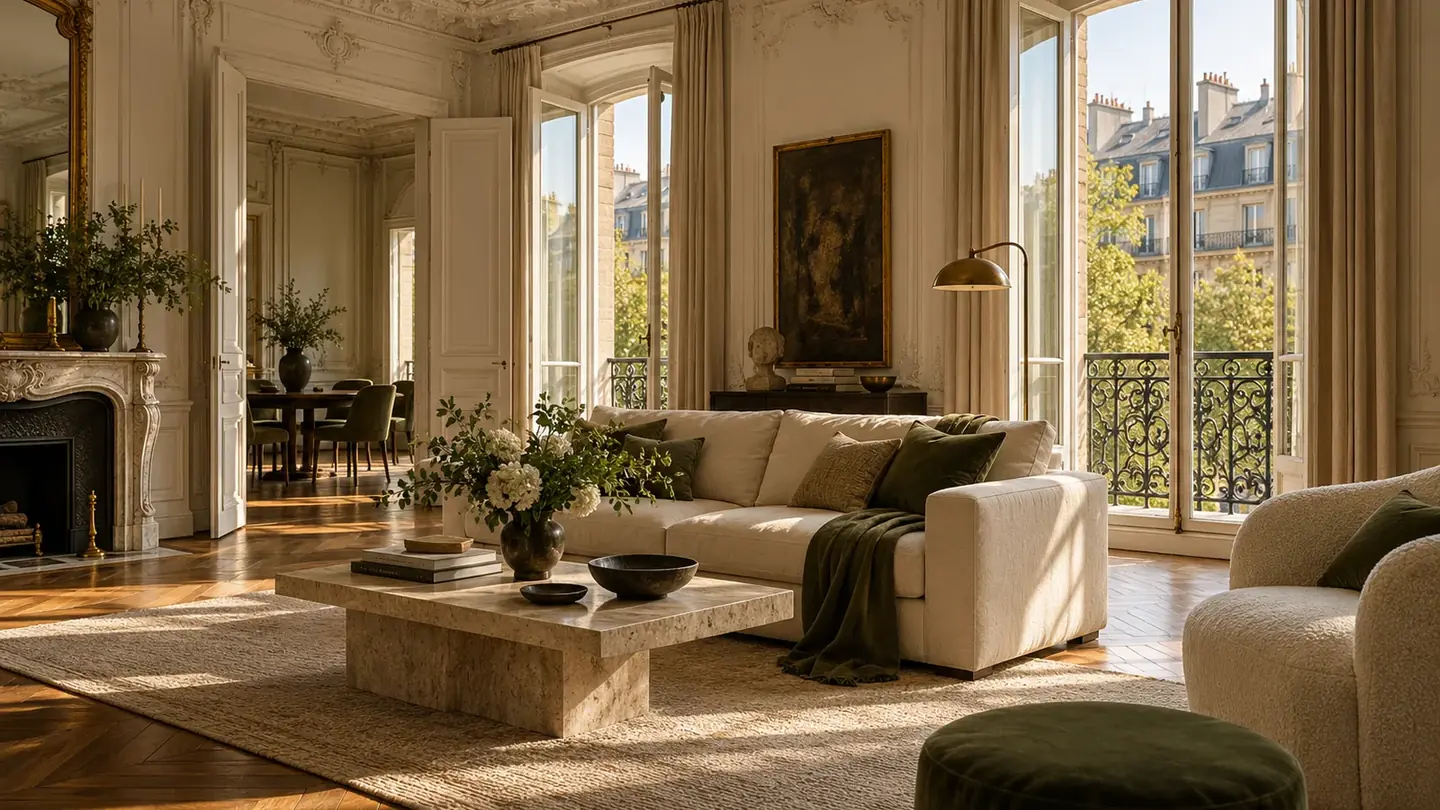
Change of use: when do you need authorisation to let furnished tourist accommodation?
Second home let short term: when change of use authorisation is required, and how to obtain it depending on the town.
Read the guide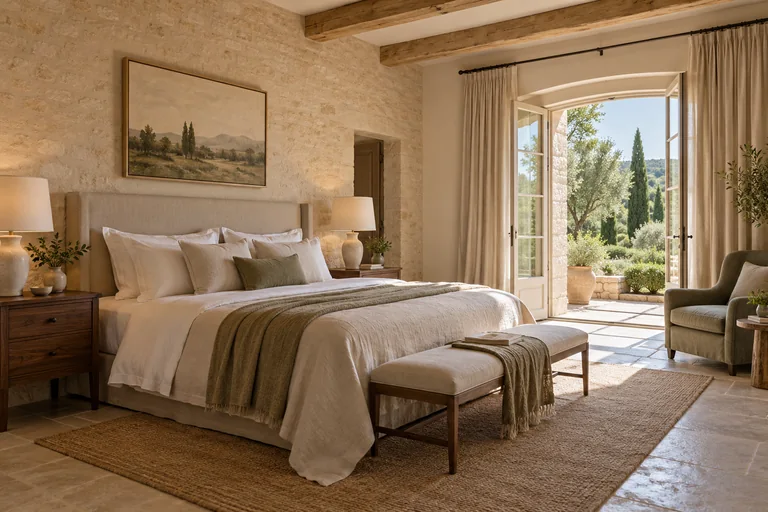
Furnished tourist rental registration number: how do you obtain it in 2026?
Town hall declaration, announced national online service, display on listings, penalties: registering a furnished tourist rental in France in 2026.
Read the guide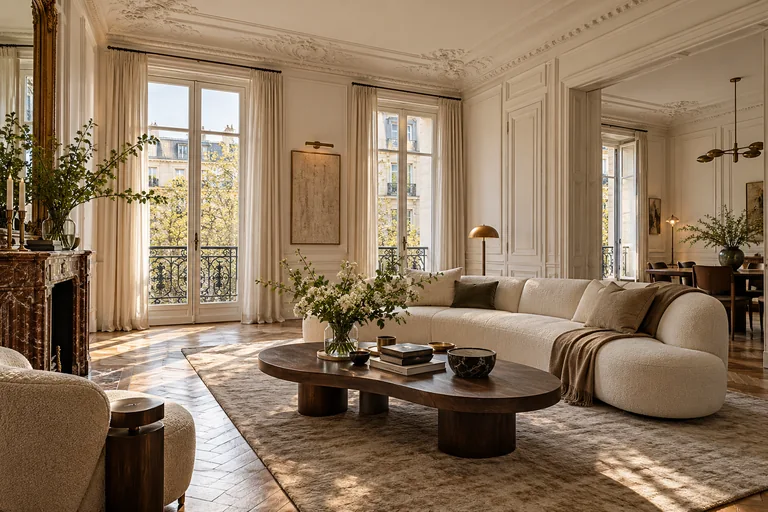
The Le Meur law: what does it change for your furnished tourist rental?
Registration, 90-day cap, quotas, DPE, micro-BIC, penalties: everything the Le Meur law changes for your furnished tourist rental in France.
Read the guideFurnished holiday let regulations: declaring your property and counting your days
Everything starts with the declaration. The Le Meur Act extends to the whole of France the obligation to declare a meublé de tourisme (furnished holiday let) and to display a number on every listing, main residences included (art. L.324-1-1 of the Tourism Code). The national online portal, expected “no later than 20 May 2026”, is still not open at 18 October 2026: its launch is announced for the fourth quarter of 2026 (service-public.fr). For now, the furnished holiday let registration number is therefore issued by the municipalities that have introduced it, and the declaration is filed with the town hall (Cerfa form 14004 or the municipal online service). On top of this first obligation comes a cap on letting days that applies only to main residences. This general information, up to date as of October 2026, should be checked with a notary or a lawyer.
From the municipal service to the national portal
Once the national registration portal opens, declarations will be made online in every municipality, with a single number to display on Airbnb, Booking or Abritel. Existing municipal numbers will have to be renewed on this portal within a period of several months, after which they will cease to be valid (service-public.fr, July 2026). This system should not be confused with API Meublés, the State platform that passes activity data from the booking platforms on to municipalities, governed by decrees no. 2026-196 and 2026-197 of 19 March 2026. The mayor may also inspect the property and suspend the number. The sensible approach is to keep your current declaration up to date, retain your supporting documents and prepare for the switch to national registration.
Contrary to what several websites claim, national registration has not been compulsory since 20 May 2026: the portal is not open. The applicable rule remains the declaration at the town hall, with the municipal number wherever one exists, until the national system actually goes live.
Main residence: 120 days, or 90 if the council decides
A résidence principale (main residence) is a home occupied for at least eight months a year. Letting it as a furnished holiday let is limited to 120 days a year, and since 1 January 2025 any municipality may lower this cap to 90 days by a reasoned council decision (Le Meur Act). Paris has done so: the cap there has been 90 days since January 2025 (paris.fr). The count covers nights let across all platforms combined. Since platforms pass their data on to municipalities, any overrun now shows up without a specific investigation. For a prestige flat, it is better to concentrate lettings on the weeks of strongest demand (trade fairs, festivals, school holidays) than to scatter the available days. The logic is that of an allowance to be made the most of, not a ceiling to be reached.
Exceptions to the cap and the 2026 case law
The main residence cap has three exceptions: professional obligation, health reasons and force majeure. The Court of Cassation interprets them strictly: it has ruled that studies or an internship do not constitute a professional obligation allowing the 120-day limit to be exceeded (Cass. 3e civ., 16 April 2026, no. 24-22.809). The stakes are real, as exceeding the authorised duration exposes the owner to a civil fine of up to €15,000 under the amounts set by the Le Meur Act. In the case of a long absence, the real question lies elsewhere: is the home still a main residence at all? If it is not, the second home regime applies, and potentially change of use with it.
Short-term rental rules in 2026: change of use, compensation and quotas
As soon as the property is not your main residence, the logic changes entirely. A second home let as a furnished holiday let amounts to a change of use, or changement d’usage, wherever the procedure exists: it applies automatically in municipalities of more than 200,000 inhabitants and in the inner Paris suburbs, elsewhere by council decision, and since the Le Meur Act every municipality may introduce it without the prefect’s approval. The Paris case shows how demanding this can be: a luxury concierge in Paris works within a framework where compensation is required in the same administrative district, with double or triple the floor area in the most pressured sectors (municipal regulation 2025 DLH 44). Before any purchase or letting project, analysing the local regulation is therefore the first step.
When change of use authorisation is required
Authorisation covers residential premises converted into short-stay tourist accommodation. Premises are deemed residential, which is proven through deeds and archives, if they were so between 1970 and 1976, or at any time during the last thirty years (notaires.fr). Local regulations often distinguish individuals from companies and set the duration of authorisations. In Chamonix, authorisation is required from the very first night for a second home, valid for three years, renewable, limited to one per owner and without compensation (Chamonix regulation 2026). In Nice, since 1 September 2026, the temporary authorisation lasts five years, is not renewable and is limited to one per individual owner. These differences explain why two comparable properties can offer entirely different letting prospects.
Compensation and commercial rights
Compensation is the most restrictive mechanism: it requires the simultaneous conversion into housing of premises with another use, or the purchase of commercial rights, known as droits de commercialité, from an owner who does so. In Paris, the compensating floor area must be equal, double or triple depending on the sector; in Nice, compensation on a one-for-one basis and of equivalent area applies from the second home onwards or once the temporary authorisation ends; in 24 municipalities of the Basque Country, including Biarritz, Bayonne and Saint-Jean-de-Luz, it is compulsory within the same municipality. The Conseil d’État (the supreme administrative court) upheld this last regulation on 11 June 2026 (no. 504736), finding it justified by the housing shortage and proportionate. Its cost weighs on the economics of the property and must be built into the purchase study from the outset.
Quotas, temporary authorisations and reserved zones
The Le Meur Act gave municipalities two further tools. The first is the authorisation quota: a municipality may set a maximum number or share of temporary authorisations, each lasting five years at most (ministry leaflet, 2025). Nice applies it with 691 authorisations for 2026 spread across four zones. The second concerns planning: in municipalities subject to the tax on vacant housing or with more than 20% second homes, the local plan may designate sectors reserved for main residences (art. L.151-14-1 of the Planning Code). The easement concerns new buildings and is recorded in the deeds. For a buyer, these provisions should be examined with the notary before signing the preliminary sale agreement.
Le Meur Act: co-ownership, energy rating and property safety
Beyond the municipality, two further frameworks bind the owner who lets: that of the building and that of the home itself. The co-ownership may prohibit the activity, the energy performance certificate governs access to change of use, and safety obligations apply to any home hosting guests. These are precisely the points that luxury short-term rental management checks before the first booking, because a dispute with the building manager, a poor energy rating or an unsecured pool can halt the letting far more surely than a pricing error. In a high-end property, technical compliance is part of the quality of hospitality: guests renting an exceptional villa or chalet expect a flawless place, including in what they cannot see.
Co-ownership: the double majority of article 26
In a building held in copropriété (co-ownership), the Le Meur Act has made it easier to ban furnished holiday lets. Where the building rules already contain a residential-only clause, or clause d’habitation bourgeoise, prohibiting any commercial activity in non-commercial units, the general meeting may ban tourist letting of units that are not main residences by the double majority of article 26, namely a majority of co-owners representing at least two thirds of the votes, rather than unanimously. Rules drawn up since 21 November 2024 must state expressly whether tourist letting is permitted or prohibited. The owner must inform the syndic (building manager) that the property is being let, and the matter is placed on the agenda of the next general meeting for information (ministry leaflet, 2025). Reading the building rules and the latest meeting minutes is therefore essential.
Energy rating: class E today, class D in 2034
In mainland France, any new change of use application for a furnished holiday let requires a DPE (energy performance certificate) rated A to E, then A to D from 1 January 2034. On that same date, all furnished holiday lets that are not the owner’s main residence must be rated A to D; main residences let to guests are not affected (ministry leaflet, 2025). The mayor may request the certificate, to be supplied within two months on pain of a penalty of €100 per day; a non-compliant home exposes the owner to a fine of up to €5,000 per unit. Planning a programme of works ahead of time (insulation, windows, heating) protects both compliance and the heritage value of the property.
Equipment and safety: the owner’s obligations
A furnished holiday let must offer guests a safe home, and the mayor may inspect its safety. The smoke detector, compulsory in every home under the Act of 9 March 2010, must be installed and maintained by the owner in the case of a seasonal or furnished let. A private, unenclosed in-ground swimming pool must be fitted with a standardised safety device (fence, cover, shelter or alarm) under the Act of 3 January 2003, a particularly sensitive point for coastal villas. Gas and electrical installations, the fireplace and the spa require documented maintenance. Finally, insurance must be expressly suited to short-term letting, as a standard policy may exclude this type of occupancy. Before each season, check the following points.
- The declaration or registration number appears on every listing.
- The co-ownership permits letting and the building manager has been informed.
- The energy certificate is available and compatible with the property’s regime.
- Smoke detectors and pool safety are in place.
- The insurance expressly covers short-term letting.
Furnished holiday let regulations: penalties and the role of the concierge
The Le Meur Act has significantly raised penalties, and enforcing them is made easier by platforms passing their data on to municipalities. The maximum amounts are now a real deterrent, even for a wealthy owner, and can be combined. A home let without a number can also be spotted without a lengthy investigation. Some municipal pages still show the former amounts (€5,000 and €10,000): prudence suggests reasoning on the higher figures. The table below sets out the maximums presented by the ministry. It also highlights an often overlooked point: the law expressly targets intermediaries, concierge services included, which makes compliance a responsibility shared between the owner and the professional who manages the property.
| Breach | Maximum penalty |
|---|---|
| Failure to declare | €10,000 (administrative fine) |
| False declaration or false number | €20,000 (administrative fine) |
| Exceeding the day cap for a main residence | €15,000 (civil fine) |
| Change of use without authorisation | €100,000 per unit, plus a penalty of up to €1,000 per day per m² |
| Non-residential premises let without authorisation | €25,000 |
| Intermediary assisting fraud | €100,000 |
The penalties an owner faces
Penalties fall into three groups: administrative fines imposed by the mayor, civil fines imposed by the court at the municipality’s request, and criminal penalties for false declaration or concealment, up to one year’s imprisonment and a €80,000 fine. Change of use without authorisation remains the heaviest risk: up to €100,000 per unit, together with a daily penalty of up to €1,000 per square metre until the situation is regularised (ministry leaflet, 2025). On top of this come suspension of the number by the mayor and removal of listings by the platforms, which must take down non-compliant offers or face fines of up to €50,000. A listing removed in the middle of the season, with bookings to refund, may cost more than the financial penalty itself.
The intermediary’s liability and the Hoguet Act
The ministry leaflet explicitly names concierge services among the intermediaries liable to a €100,000 fine when they assist fraud. The concierge’s own status falls under the Hoguet Act of 2 January 1970: the carte T (letting agency licence) allows letting brokerage without handling funds, while only the carte G (property management licence), issued by the Chamber of Commerce, authorises collecting rent, security deposits and tourist tax on the owner’s behalf, with a written mandate and a financial guarantee. Without a licence, a concierge is limited to practical services: cleaning, linen, welcoming guests, handing over keys and minor repairs. Practising without a licence is punishable by up to six months’ imprisonment and a €7,500 fine, and holding funds without a licence by up to two years and €30,000.
What a concierge brings to your property’s compliance
A serious high-end concierge service builds regulation into its daily organisation: displaying the number on every listing, tracking the night count of a main residence, keeping the energy certificate and maintenance certificates, informing the building manager, monitoring tourist tax and screening guests. The conciergerie.luxe service, free and without obligation for the owner, consists of studying your request and then putting you in touch with a concierge whose expertise matches your property and your area; the services are then carried out by the chosen concierge, under its own offer and the contract signed directly with it. At your first conversation, ask which professional licence it holds, how rent is collected and what checks it carries out before taking a property under management.
Frequently asked questions about furnished holiday let regulations
Has the national registration number been compulsory since 20 May 2026?
No, not as of 18 October 2026. The national portal is not yet open; its launch is announced for the fourth quarter of 2026 (service-public.fr). Until then, the declaration is filed with the town hall, with the municipal number wherever the municipality has introduced one.
Is a second home subject to a cap on letting days?
The statutory cap of 120 days, which councils can lower to 90, applies only to main residences. A second home has no national day cap, but it may require change of use authorisation, with compensation or a quota depending on the municipality.
Can the co-ownership ban my short-term letting?
Yes, by the double majority of article 26, if the building rules contain a residential-only clause prohibiting any commercial activity in non-commercial units. Rules drawn up since 21 November 2024 must state whether tourist letting is permitted.
Must a furnished holiday let reach a minimum energy rating?
For a new change of use application, the energy certificate must be rated A to E in mainland France. From 1 January 2034, all furnished holiday lets that are not the owner’s main residence must be rated A to D. A main residence let to guests is not affected.