

Luxury holiday rentals in France do not form a single market but a mosaic of territories that follow neither the same seasons, nor the same guests, nor the same rules. A prestige apartment in Paris, a villa on the Côte d’Azur, a chalet in Courchevel or a mas (Provençal farmhouse) in the Alpilles each call for management designed around its address. This section brings together our destination guides: when demand peaks, what guests expect, the local rules for furnished tourist lets and how a high-end concierge service is organised on the ground.
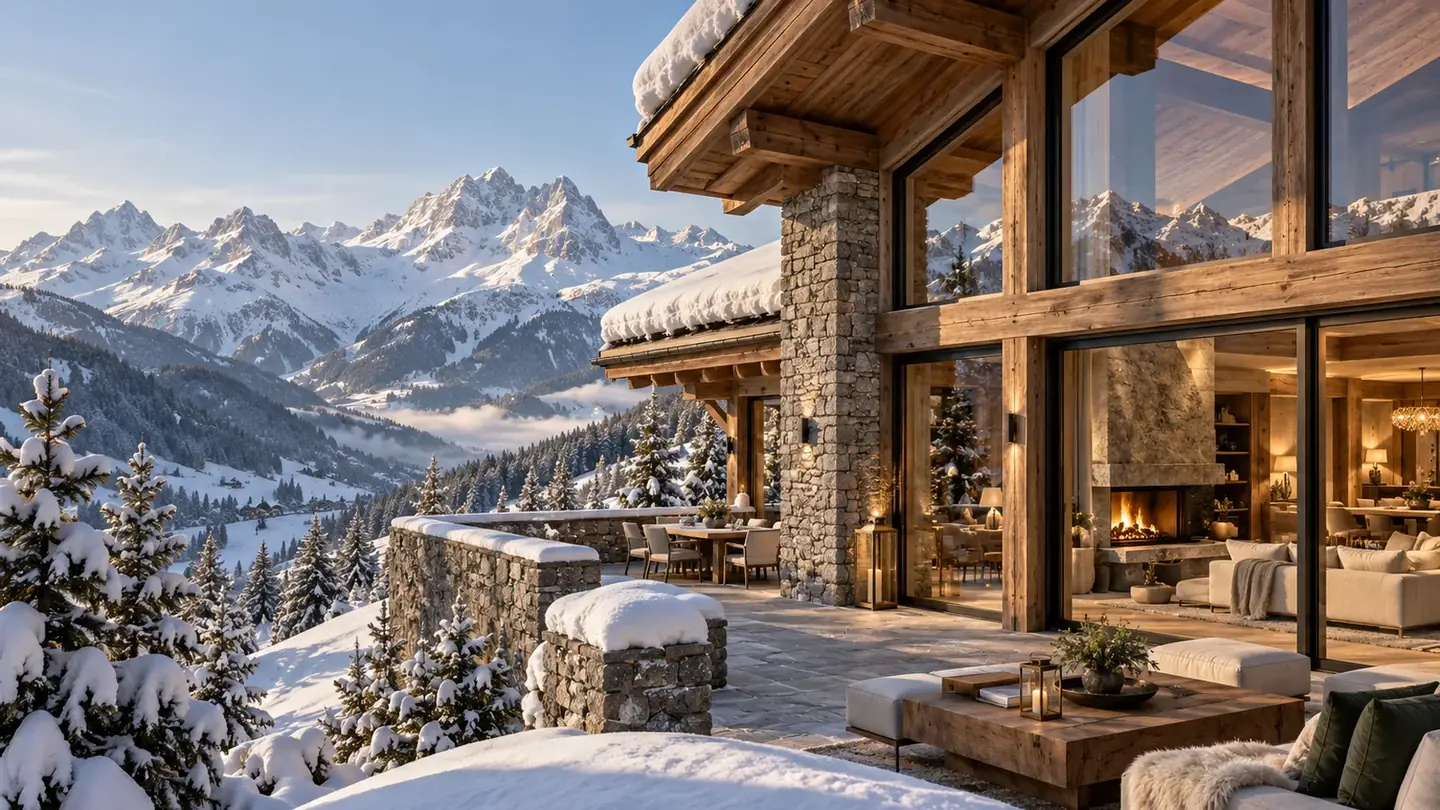
Luxury holiday rentals in France: six territories, six logics
The first question a serious concierge asks is about the address. High-end France can be read as six main territories: Paris, the Côte d’Azur, the Alps, Provence, the Atlantic coast together with Normandy, and Corsica. Each has its own season, its own guests and, increasingly, its own local rules for holiday lets, which the law of 19 November 2024 (known as the loi Le Meur) has allowed municipalities to tighten. A luxury concierge on the Côte d’Azur does not work like a team based in Megève or Cap-Ferret: it handles different peaks, different arrivals and different formalities. The map below locates our destinations; the following sections set out the essential markers, with only those local rules established from published acts or official pages.
Paris: urban demand and one of the strictest frameworks
Paris is the only market on this list that does not follow the rhythm of a beach season or a ski season. High-end demand is spread across the year, driven by business travel, trade fairs and cultural tourism, with international guests who expect a prestige apartment run like a hotel suite. In return, the framework is among the most demanding in France: in municipalities of more than 200,000 inhabitants, letting a second home as a meublé de tourisme (furnished tourist let) automatically falls under the changement d’usage (change of use) procedure, to which local regulations may attach a compensation requirement. Before any question of decoration or price, the exact status of the property, main residence or second home, must therefore be established, along with what the building’s co-ownership rules allow.
Cannes, Antibes, Nice: the Côte d’Azur set by its events
On the Riviera, the calendar is shaped as much by events as by summer: MIPIM in March, the Cannes Film Festival in May, the Monaco Grand Prix (4 to 7 June in 2026), then the summer high season until September. On the regulatory side, Cannes has had a municipal online service since 2016 that issues a 13-digit reference for main residences and second homes alike; the quotas announced by the town in August 2025 had not been the subject of any adopting resolution as at 17 October 2026. In Antibes, resolution CM2025/100 of 23 May 2025 introduced a 90-day cap for main residences from 1 July 2025, and launched studies into a possible change-of-use regime in the centres of Antibes and Juan-les-Pins. Nice, finally, combines urban and seaside tourism.
Saint-Tropez and the gulf: long-standing local rules
The Gulf of Saint-Tropez is the part of the Côte d’Azur where local regulation is most developed. In Saint-Tropez, the town hall requires prior change-of-use authorisation (article L631-7 of the Code de la construction et de l’habitation, the French Building and Housing Code) for a second home let to holidaymakers, via DéclaLoc, and amendment no. 6 to the plan local d’urbanisme (PLU, local urban plan) of February 2026 reserves new housing in zones UB3a and UC3 for main residences. Ramatuelle has required a registration number since 1 January 2019, and a prefectoral order of 11 September 2018 made change of use applicable there. Gassin grants three-year renewable authorisations, processed within two months, with an energy rating of A to E; Grimaud also applies a three-year authorisation, with fines of up to €50,000.
The national registration number provided for by the loi Le Meur was due to apply by 20 May 2026 at the latest. As at 17 October 2026, the national online service has not opened and its launch is announced for the fourth quarter of 2026 (service-public.fr). Until then, declaration at the town hall or through the municipal online service remains the rule.
High-end rentals in the Alps: resorts, seasons and local rules
The mountains reverse the coastal calendar: the ski season concentrates most high-end demand, from December to April depending on altitude, and the Alpine summer then offers a second season devoted to hiking, lakes and mountaineering. Expectations are very specific: a chalet heated and ready on arrival, ski lockers, a well-kept spa, transfers from stations and airports, sometimes a private chef. A luxury concierge in Courchevel therefore organises tight weekly changeovers in winter, with cleaning and linen teams deployed within a few hours, followed by more spaced-out property care between seasons, when the empty chalet must be checked and kept frost-free. Local rules, for their part, vary from one valley to the next, sometimes between two municipalities sharing the same ski area.
Courchevel and Méribel: two neighbours, two regimes
Courchevel and Méribel share the 3 Vallées ski area, but not the same framework. In Courchevel, holiday lets are declared to the town hall through the taxe de séjour (tourist tax) portal, without a local number, pending the national number; as far as we are aware, no change-of-use rule and no 90-day cap had been adopted as at 17 October 2026. The new local plan approved on 26 February 2026 does, however, include tools designed to favour permanent housing, and the tourist tax will be capped at €5.28 per day per adult from 1 January 2027. In Les Allues, the municipality that includes Méribel, resolutions of 17 January 2024 introduced a prior temporary authorisation for all properties let as short-term furnished rentals, including those already let, with a unique number issued together with the authorisation order.
Megève, Saint-Gervais, Combloux: the national baseline
In the Mont-Blanc area, several resorts sought after for their village character had not, as far as we are aware at 17 October 2026, adopted any local regime beyond the national baseline. In Megève, the declaration is made by Cerfa form through DéclaLoc, the registration number not yet applying there; the PLU does, however, prohibit changing the use of existing tourist accommodation in certain sectors (UH1ca and UH1cc). Saint-Gervais-les-Bains and Combloux likewise require only a simple declaration, whereas the neighbouring municipality of Les Contamines-Montjoie has applied regulations in force since 19 June 2026. A national baseline does not mean an absence of rules: declaration, the 120-day cap for a main residence, tourist tax, co-ownership rules and energy ratings apply everywhere.
Val d’Isère, Chamonix, Annecy: three markets of their own
Val d’Isère, Chamonix and Annecy complete the Alpine map with very different profiles. Val d’Isère, a high-altitude resort linked to Tignes, serves demanding skiers over a long winter season, with a quieter summer. Chamonix lives on two genuine seasons: skiing and off-piste in winter, mountaineering, trail running and hiking in summer, with a very international clientele. Annecy is above all a summer lakeside destination, sought after for its lakefront houses and its proximity to Geneva, which also works out of season thanks to business trips and weekend breaks. In Savoie and Haute-Savoie, pressure on permanent housing has led several local authorities to regulate furnished tourist lets: the chosen concierge establishes the regime applicable to the exact address before the first booking.
Luxury holiday rentals in Provence and on the Atlantic coast
Provence and the Atlantic share a very pronounced summer season, extended in spring and September by shorter stays, but they attract neither the same properties nor the same guests. In Provence, demand centres on farmhouses, bastides (country manor houses) and village houses with a pool and garden, often let by the week to families or groups of friends. A luxury concierge in Provence therefore devotes a large share of its work to grounds and outdoor upkeep: pool, olive trees, irrigation and terraces, all of which determine the quality of a stay in July. On the Atlantic and in Normandy, weekend guests carry more weight, particularly around Deauville, while the Basque coast and Cap-Ferret experience an intense summer. Here again, local regimes range from the simple national baseline to mandatory compensation.
Luberon and Alpilles: Gordes, Saint-Rémy and Aix
The Luberon and the Alpilles offer a clear regulatory contrast. Gordes had not, as far as we are aware at 17 October 2026, adopted any local regime beyond the national baseline: no change of use and no lowered cap. Saint-Rémy-de-Provence introduced a municipal registration number by resolution of 25 June 2018, issued on the departmental DéclaLoc platform, whether or not the property is a main residence. Aix-en-Provence requires a 13-digit number and, since a resolution of 13 December 2017, has applied a change-of-use regime: temporary three-year authorisations, renewable five times, reserved for private individuals, with no compensation. In July 2025 the city referred the matter to the Metropolitan authority with a view to amending this regime, with no metropolitan resolution adopted as at 17 October 2026.
Biarritz and the Basque Country: compensation as the rule
The Basque coast is one of the most tightly regulated territories in France. The regulations of the Pays Basque urban community, adopted on 5 March 2022 and amended since, require in 24 municipalities in high-pressure housing areas a change-of-use authorisation with mandatory compensation, in force since 1 March 2023: converting premises used for another purpose into housing, with at least an equivalent floor area in the same municipality, or buying commercialité (commercial use rights). On 11 June 2026, the Conseil d’État (France’s highest administrative court) ruled that such regulations are lawful where they meet an overriding reason in the public interest and remain proportionate. In Saint-Jean-de-Luz, an owner may obtain only one authorisation; in Bidart, as in Biarritz, Bayonne, Anglet and Boucau, the intermunicipal local plan voted in June 2025 reserves certain urban zones for building main residences.
Cap-Ferret, Deauville and Corsica: short, intense seasons
Cap-Ferret, Deauville and Corsica illustrate three ways of being a luxury destination. In Cap-Ferret, on the peninsula that closes the Arcachon basin, demand is concentrated in summer and on villas close to the water. Deauville, around two hours from Paris, works instead on weekends, school holidays and a calendar of equestrian and cultural events that spreads demand across the year. Corsica has a short and dense summer season, with villas that are sometimes isolated and whose logistics (access, water, pool, supplies, linen) call for a solid local presence. In all three territories, the national baseline applies in every case, and municipalities may add change of use, quotas or a 90-day cap: this is a point the chosen concierge checks address by address.
High-end rental destinations: what changes and what stays the same
From one territory to another, certain obligations do not vary. The holiday let is declared at the town hall pending the national online service announced for the fourth quarter of 2026; a résidence principale (main residence), occupied for at least eight months a year, cannot be let for more than 120 days, unless the municipality has lowered this cap to 90 days; change of use applies automatically in municipalities of more than 200,000 inhabitants and in the inner Paris suburbs, and elsewhere by resolution. By 1 January 2034, furnished tourist lets that are not the owner’s main residence will need an energy performance rating (DPE) of A to D. Added to this are the tourist tax and co-ownership rules. This general information is up to date as of October 2026 and should be confirmed for a specific property with a professional.
| Territory | Local marker established in October 2026 |
|---|---|
| Paris | Automatic change of use for a second home (municipality of more than 200,000 inhabitants) |
| Côte d’Azur | Municipal number in Cannes; 90-day cap in Antibes since 1 July 2025 |
| Gulf of Saint-Tropez | Change of use in Saint-Tropez, Ramatuelle, Gassin and Grimaud |
| Alps | Authorisation in Les Allues (Méribel); national baseline in Courchevel and Megève |
| Provence | Change of use in Aix-en-Provence; national baseline in Gordes |
| Basque Country | Mandatory compensation in 24 municipalities of the urban community |
A concierge active in your area
These differences explain why choosing a concierge starts with the territory. A locally established team knows the tradespeople, laundries and pool technicians of its valley or coastline, can anticipate the changeovers of a February Saturday or a Festival week, and masters the procedures specific to the municipality. Conciergerie.luxe is an introduction service that is free and without obligation for the owner: you describe your property, your expectations and your calendar, we study your request and look for a concierge active in your area whose expertise matches your property. The services are then carried out by the chosen concierge, according to its offer and the contract you sign directly with it; we do not perform any services and do not handle any funds.
The rules for your address
Declaration, change of use, day caps: what applies in your municipality, established before any listing goes live.
The local calendar
Festival, ski season, Provençal summer or Normandy weekends: pricing and minimum stays follow the real rhythm of the territory.
The network on site
Linen, cleaning, pool, heating, on-call cover: the quality of a stay depends on responsive tradespeople based near the property.
Comparing destinations before investing
For an owner considering the purchase of a property intended for short-term letting, this territory-by-territory reading is just as useful. A Parisian apartment used as a second home requires a change of use, possibly with compensation, before a single booking; a villa in the Gulf of Saint-Tropez or on the Basque coast comes up against regulated authorisations; a chalet in Courchevel or Megève currently falls under the national baseline, with no guarantee that this framework will remain unchanged. Add to this seasonality, which determines the number of weeks that can genuinely be let, and taxation, which is sensitive to official classification as a furnished tourist let. A notary or a lawyer will confirm the legal position of a property; the concierge will bring an operational reading of the local market and of the level of service the property can sustain.
Frequently asked questions about luxury holiday rentals in France
Which destination should I choose for a luxury holiday rental?
No destination wins in absolute terms: it all depends on the property, the use you keep for yourself and the weeks you are prepared to release. The mountains concentrate demand in winter, the coast and Provence in summer, while Paris spreads it across the year.
Are the rules the same throughout France?
The national baseline set by the loi Le Meur applies everywhere: declaration, a 120-day cap for a main residence, energy rating requirements. Each municipality can then add change of use, compensation, quotas or a 90-day cap, as Antibes has done since 1 July 2025.
Is the national registration number already mandatory?
Not yet as at 17 October 2026: the national online service has not opened and its launch is announced for the fourth quarter of 2026. In the meantime, declaration at the town hall or through the municipal online service remains the rule, and existing municipal numbers will then have to be renewed on the national platform.
Can you find a concierge in all of these destinations?
We look for a concierge active in your area, without promising systematic coverage of every municipality. The introduction is free and without obligation for the owner.